Why I Eat 18 Eggs a Day—And You Probably Should Too
Eggs are one of the most nutrient-dense, affordable, and misunderstood foods out there. In this post, I share why I eat 18 eggs a day, bust the cholesterol myth, and explain why eating more eggs might be the simplest health upgrade you can make.
Adam Phomin
4/21/20254 min read
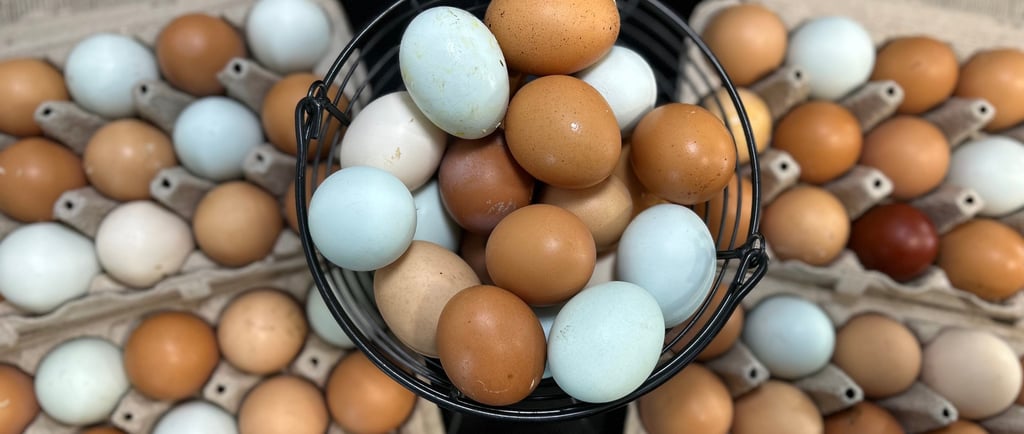
Why I Eat 18 Eggs a Day—And You Probably Should Too
Nature’s multivitamin, protein powerhouse, and ultimate real food.
Eggs have taken a beating in the media over the years—lumped in with saturated fat and cholesterol as something to avoid. But if you dig past the headlines and the food pyramid dogma, you’ll find that eggs are one of the most nutrient-dense, cost-effective, and evolutionarily aligned foods we can eat.
Packed With What Matters
Let’s start with what’s inside. A single egg contains everything needed to grow life from scratch. That’s not hyperbole—it’s biology. Eggs are loaded with:
Complete protein – With all 9 essential amino acids, eggs support muscle repair, hormone production, and brain function.
Choline – Essential for brain development, liver function, and cell membrane integrity. Most people don’t get enough.
Saturated fat – Yes, the kind we were told to fear. It supports hormone production, immune function, and cellular health.
Cholesterol – Still demonized by outdated science, cholesterol is crucial for every cell in your body—and eggs provide it in abundance.
Fat-soluble vitamins – Vitamins A, D, E, and K2 are all present in their most bioavailable forms—especially in eggs from chickens raised on pasture.
In short: this little shell is carrying a powerhouse of nutrients, and it’s doing it in a form your body knows exactly how to use.
But What About the Cholesterol?
The myth that eating eggs raises your blood cholesterol and increases your risk of heart disease has been stubborn. But it’s just that—a myth.
Multiple modern studies have shown no significant link between egg consumption and heart disease in healthy individuals. Your liver produces cholesterol on its own, and when you eat more, your body makes less. It’s a self-regulating system. The real culprits behind heart disease are more likely to be inflammation, processed seed oils, and ultra-processed carbohydrates—not eggs.
A Daily Staple in Our House
Personally, I eat 18 eggs a day. That’s not a typo. It’s one of the easiest, most affordable ways to pack in high-quality protein and healthy fats without overcomplicating things.
Now, I’m not saying you need to eat 18 eggs a day. That’s just what works for me based on my size, activity level, and overall lifestyle. But if you’ve been scared off by decades of bad nutrition advice, just eating more eggs than you do now—especially if that number is close to zero—is a solid step in the right direction.
I’ll often have them scrambled, hard-boiled, or fried in lard or butter. And if I’ve had a meal but I’m still hungry—or I start craving something sweet—I just crack a few more in the pan. That quick hit of protein and fat usually shuts down the cravings and keeps me on track. Eggs are my go-to tool for eating clean without feeling deprived.
Eggs Are Not Expensive—They’re Undervalued
We hear it all the time: “Eating healthy is too expensive.” And yes, if you’re shopping for pre-packaged “health foods” and exotic powders, that might be true. But eggs? You’d be hard-pressed to find a better return on investment.
For just a few dollars, you’re getting protein, fat, vitamins, and minerals that would cost 10x as much in supplement form. In fact, if you had to survive on one food for a while, you could do a lot worse than eggs.
Not All Eggs Are Created Equal
While even a conventional egg is better than a bowl of cereal or a slice of toast, the quality of the egg—and the life of the chicken it came from—matters.
Best: Pasture-raised chickens with access to fresh grass, bugs, and sunlight. If they’re rotating across land (like on a regenerative farm), even better.
Better: Organic and/or non-GMO feed, ideally with outdoor access.
Okay: Free-range or cage-free from the store. Marketing terms can be misleading, but they’re a step up from battery cages.
Still food: Conventional eggs from confined chickens. Not ideal, but still more nutritious than most processed snacks.
Some people use yolk color as a shortcut for quality—but that’s not reliable anymore. Large commercial producers often add synthetic pigments to the feed to deepen yolk color without improving nutrition. The only way to really know how your eggs were produced is to know the farmer—or better yet, be the farmer.
If you’re allowed to keep backyard hens where you live, do it. It should be legal everywhere. There’s no better feeling than collecting your own eggs from your own birds and knowing exactly what went into them. It’s empowering, it’s exciting, and it’s one small step toward taking back control of your food.
Final Thoughts
The egg is a near-perfect food. Nutrient-dense, affordable, versatile, and easy to prepare. It’s time to welcome eggs back to the table—not with guilt, but with gratitude.
You don’t need to fear the fat or the cholesterol. You need to question who benefits when real food gets a bad name—and trust your body and biology instead.
Want to Take It a Step Further?
If you're ready to upgrade your eggs—and the rest of your food—check out our Find Regenerative Food page to source nutrient-dense, ethically raised food right here in Ontario.
Or just head to hoofandbeak.ca to explore more resources on real food, real health, and living closer to the land.